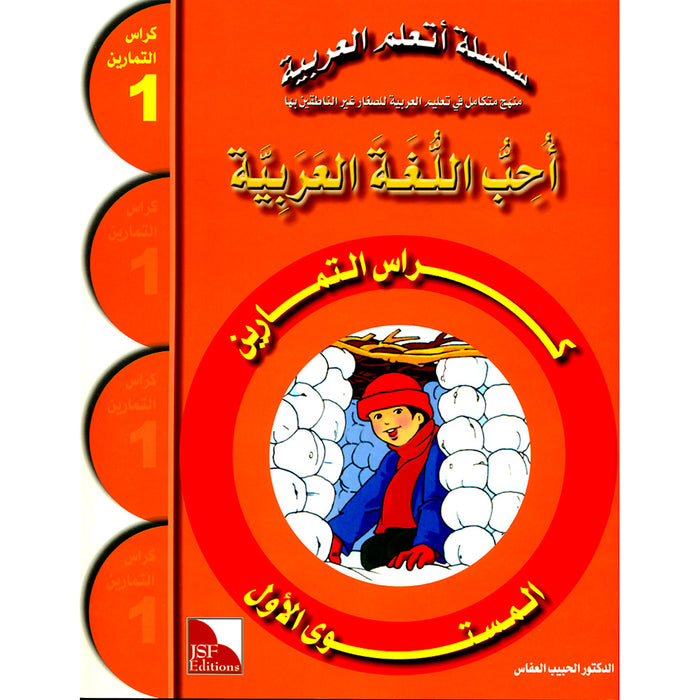
The I Love Arabic Series comes to you from expert language teachers working in over 41 European countries. It focuses on teaching the Arabic language to non-native speakers, especially benefiting those who have little time to commit to Arabic during the weekdays, and makes learning easy by covering several educational levels: Kindergarten for ages 3–5 and Levels 1–6 for ages 6–11.
Three systematic divisions (sounds, words and syntactical structure, and conversational practices) enable the learner to generate language accurately using a variety of highly successful modern techniques. These focus sections present the Arabic language clearly and inclusively to meet the needs of Western learners. This curriculum develops fluency through communication, discovery, realization, and application. It helps Arabic learners engage confidently with Arabic culture, as well as different types of reading and listening passages:
-
Reading techniques are developed through the study of a wide selection of authentic reading passages, including classical Arabic, without focusing on spoken dialect. Regular vocabulary exercises examine word-building techniques.
-
Careful balances of authentic and scripted listening materials build confidence while offering students the ability to communicate with native Arabic speakers.
-
A presentation of Arabic cultural patterns helps Western children connect with their Arabic-speaking peers worldwide.
1. Student Textbook: The student text is the first step of the I Love Arabic Series (from 6 years old) and is supported by a comprehensive workbook, handwriting book, and teacher case. The text comprises 14 units discussing critical aspects of a child’s world. Each unit is divided as follows:
-
Reading Dialogue: Simple and short passages comprising linguistic structures of sounds, vocabulary, expressions, and syntax structures, aimed at facilitating learning by teaching language processes and communication.
-
Reading Comprehension: Exercises aimed at determining children’s comprehension of dialogue and expressions.
-
Vocabulary: Vocabulary words are taken directly from the reading dialogue and combined with graphics to enhance student understanding and sensory perception.
-
Conversation: Conversational exercises encourage students to participate in classroom activities, apply reading material within dialogue, and ultimately become fluent speakers.
-
Sounds: The Arabic language is introduced sound by sound to avoid difficulties students may encounter with letters of similar appearance or sound.
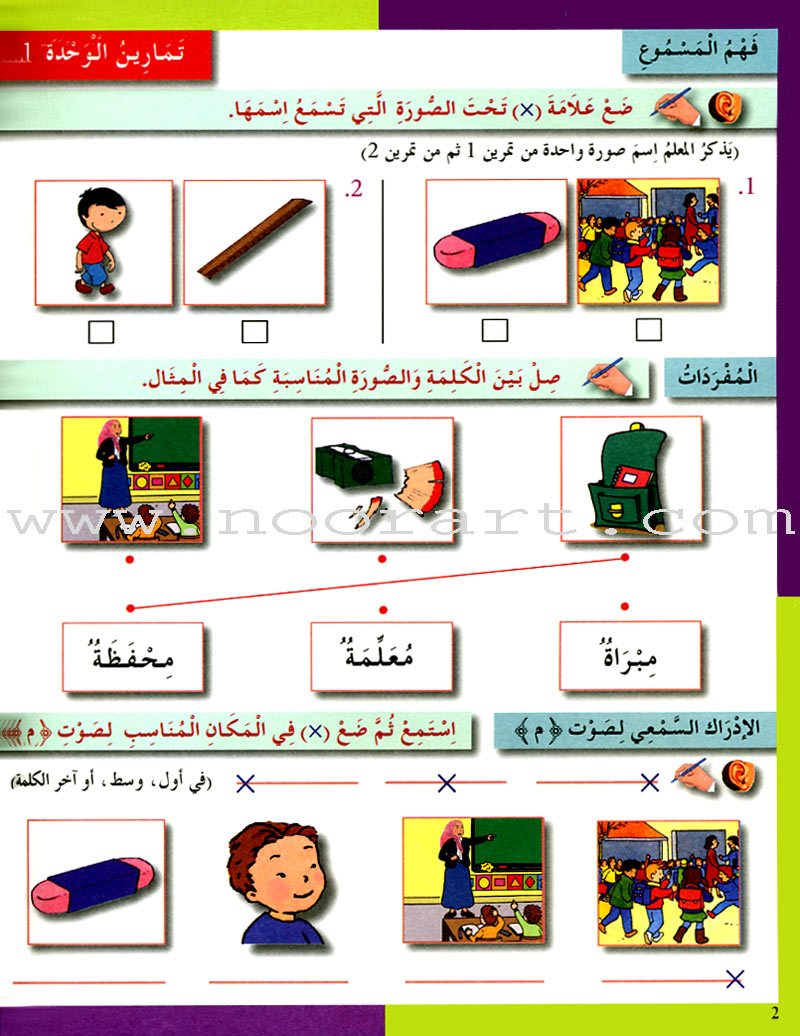
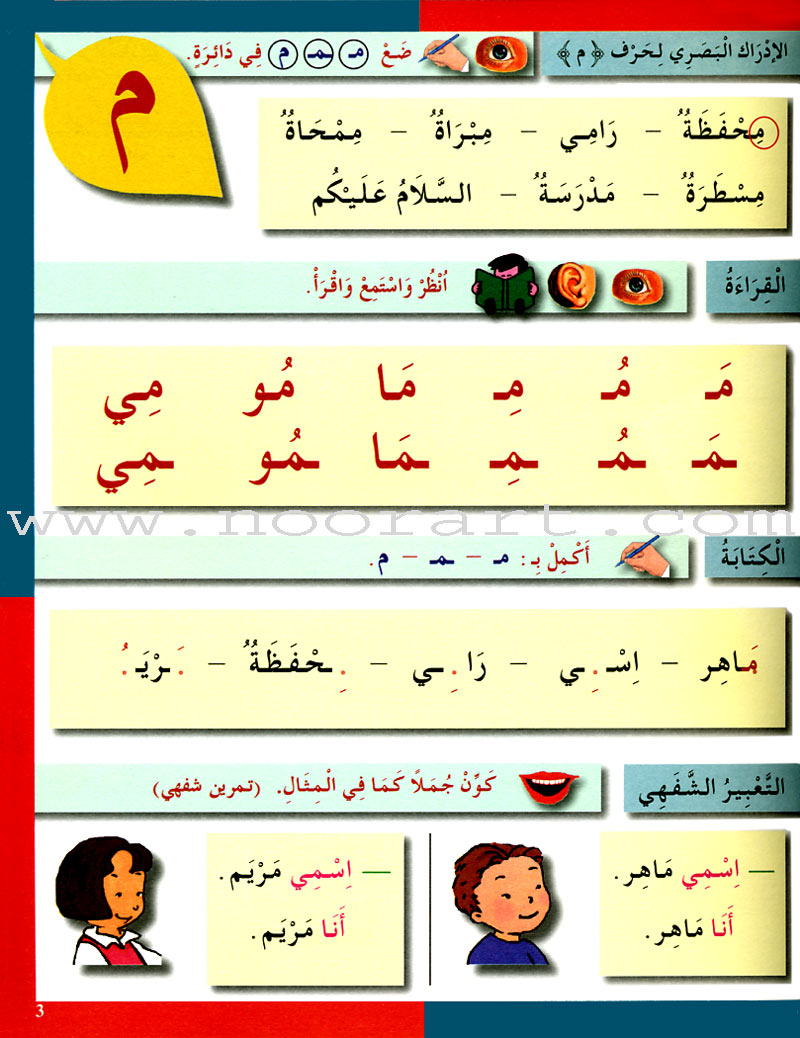
2. Workbook: The workbook includes:
-
Listening Comprehension: Exercises aimed at determining students’ understanding of new vocabulary and the position of letter sounds.
-
Vocabulary: New vocabulary is listed to assist with memorization.
-
Reading: Students practice reading new letters, words, and expressions gradually.
-
Writing: Students practice writing letters and then connecting them to form words, with illustrations to help visualization.
-
Illustrated Dictionary: Appearing at the end of the workbook, it includes vocabulary sets from all lessons to facilitate memorization.
3. Handwriting Book: Students practice writing Arabic letters, words, and expressions.
4. Teacher Case: Consists of:
-
Teacher Guide: Tips on efficient teaching practices.
-
Posters: To be used as classroom visual aids.
- Audio Materials
سلسلة "أنا أحب العربية" تأتيكم من معلمين خبراء في اللغة يقيمون في أكثر من 41 دولة أوروبية. تركّز هذه السلسلة على تعليم اللغة العربية للناطقين بغيرها، مع تقديم فائدة خاصة لأولئك الذين لا يمتلكون وقتًا كافيًا لتعلّم العربية خلال أيام الأسبوع، وتجعل عملية التعلّم سهلة من خلال تغطية عدة مستويات تعليمية: مستوى رياض الأطفال للفئة العمرية من 3 إلى 5 سنوات، والمستويات من 1 إلى 6 للفئة العمرية من 6 إلى 11 سنة.
تنقسم السلسلة بشكل منهجي إلى ثلاثة مجالات (الأصوات، الكلمات والتراكيب النحوية، والتدريبات الحوارية)، مما يتيح للمتعلمين إنتاج اللغة بدقة باستخدام تقنيات حديثة وناجحة. تُقدَّم هذه المحاور بشكل واضح وشامل لتلبية احتياجات المتعلمين في الغرب. ويهدف المنهاج إلى تنمية الطلاقة اللغوية من خلال التواصل، والاكتشاف، والإدراك، ثم التطبيق. كما يُساعد المتعلمين على التعامل بثقة مع الثقافة العربية، وأنواع متعددة من النصوص المقروءة والمسموعة.
تُطوّر تقنيات القراءة من خلال دراسة مجموعة واسعة من النصوص الأصلية، بما في ذلك العربية الفصحى دون التركيز على اللهجات المحكية.
تمارين المفردات المنتظمة تدرس تقنيات بناء الكلمات.
موازنة دقيقة بين المواد السمعية الأصلية والمعدة تساعد على بناء الثقة وتمنح القدرة على التواصل مع الناطقين بالعربية. عرض لأنماط من الثقافة العربية يساعد الأطفال في الغرب على التواصل مع أقرانهم الناطقين بالعربية في أنحاء مختلفة من العالم.
كتاب الطالب:
كتاب الطالب هو الخطوة الأولى في سلسلة "أنا أحب العربية" (ابتداءً من سن 6 سنوات)، ويدعمه كتاب تمارين شامل، وكتاب للخط، وملف للمعلم. يتكون النص من 14 وحدة تتناول قضايا مهمة في عالم الطفل، وتنقسم كل وحدة إلى ما يلي:
-
قراءة الحوار: نصوص بسيطة وقصيرة تتضمن تراكيب لغوية من أصوات، مفردات، تعابير، وبُنى نحوية، بهدف تسهيل التعلم من خلال تعليم مهارات اللغة والتواصل.
-
فهم المقروء: تمارين تهدف إلى تحديد مستوى فهم الأطفال لمعاني التعبيرات في الحوار.
-
المفردات: تؤخذ كلمات المفردات مباشرة من نصوص الحوار، وتُدمج مع رسومات لتسهيل الفهم والإدراك الحسي لدى الطالب.
-
المحادثة: تمارين حوارية تشجع الطلاب على المشاركة في أنشطة الصف، وتطبيق مادة القراءة ضمن الحوار، ليصبحوا في النهاية متحدثين بطلاقة.
-
الأصوات: يتم تقديم اللغة العربية صوتًا صوتًا لتفادي الصعوبات التي قد يواجهها الطالب في التمييز بين الحروف المتشابهة في الشكل أو الصوت.
كتاب التمارين:
تتضمن أنماط التمارين ما يلي:
-
فهم المسموع: تمارين تهدف إلى تحديد مدى فهم الأطفال للمفردات الجديدة من خلال تحديد موقع صوت الحرف وتحديده بدائرة.
-
المفردات: تُدرج مفردات جديدة لمساعدة الطلاب على الحفظ.
-
القراءة: قراءة الحروف الجديدة، ثم الكلمات فالتعابير بشكل تدريجي.
-
الكتابة: يتدرّب الطلاب على كتابة الحروف، ثم ربطها لتكوين الكلمات، وتساعد الرسوم التوضيحية على تصور الكلمات.
القاموس المصور:
يوجد في نهاية كتاب التمارين ويحتوي على مجموعات كلمات ظهرت في الدروس، مما يسهل حفظها.
كتاب الخط:
يتدرّب الطلاب من خلاله على كتابة الحروف العربية، ثم الكلمات والتعابير.
ملف المعلم ويتكون من:
-
دليل المعلم: يحتوي على نصائح حول أساليب التدريس الفعالة.
- ملصقات تُستخدم كوسائل بصرية في الصف.
- أشرطة صوتية.